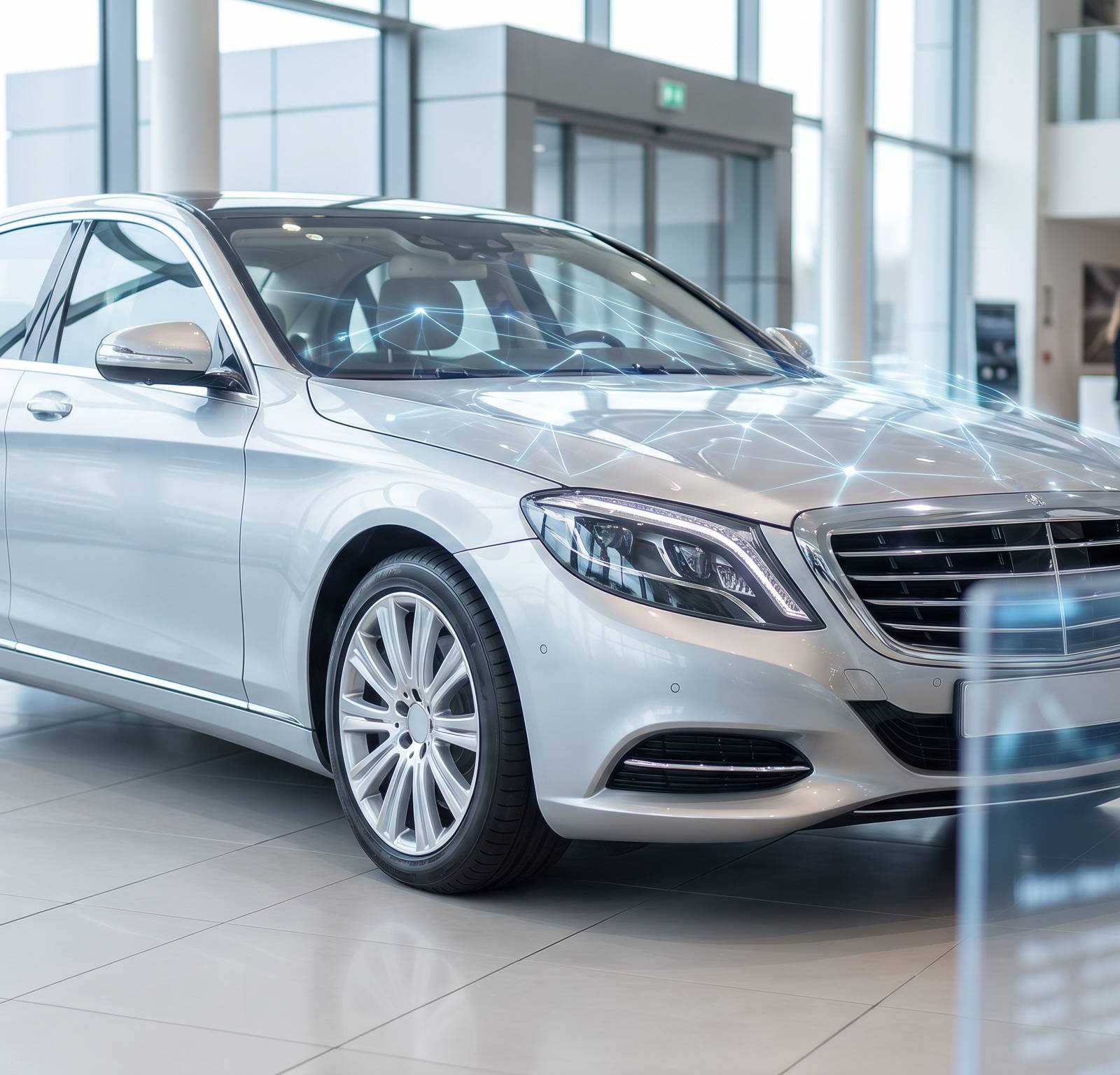
Car dealership SEO is the practice of optimizing a dealership’s website and Google Business Profile so that in-market buyers find you before they find a competitor. It covers local search (the map pack for “[brand] dealer near me”), organic rankings for inventory pages, and, increasingly, visibility in AI-generated answers when buyers ask ChatGPT or Perplexity which dealership to visit. Done well, SEO is your highest-ROI marketing channel because it captures demand at the exact moment a buyer has decided what they want.
Most dealerships rank for their own brand name and little else. The opportunity is in the rest of the funnel: people searching for specific makes and models in your area, people comparing trim levels, people asking whether a used RAV4 or CR-V is the better buy. These searches happen daily and they convert at a high rate because the buyer is already close to a decision. The dealerships that win online have content that answers these questions and inventory pages that Google can crawl, index, and rank.
The dual challenge in 2025 and beyond is showing up on both Google’s blue-link results and in AI-generated recommendations. When someone asks an AI assistant “which Toyota dealer in [city] has the best service department,” the engine pulls from sources it has already indexed and trusts. A dealership that has built content authority, earned genuine reviews, and structured its data correctly appears in both channels. One that only runs paid ads appears in neither.
Why local SEO is the foundation for every dealership
Local SEO determines whether you show up in the Google map pack, which appears at the top of results for most location-based queries. The three ranking signals Google uses for the map pack are relevance (how well your profile matches the search), distance (proximity to the searcher), and prominence (reviews, links, and recognition). A fully optimized Google Business Profile with a complete set of vehicle categories, updated hours, and a steady stream of recent reviews beats a neglected competitor profile even when they have more name recognition.
According to BrightLocal’s 2026 Local Consumer Review Survey, 97% of consumers read reviews for local businesses, and 31% only use businesses with 4.5 stars or higher. For a car dealership, where the average transaction value is tens of thousands of dollars, a 4.2-star rating versus a 4.7-star rating is a meaningful conversion difference. Responding to every review matters too: 80% of consumers say they are more likely to use a business that responds to all reviews, and 42% say they won’t use businesses that ignore them.
Practical steps to lock in your local foundation:
- Claim and fully complete your Google Business Profile, selecting “Car Dealer” as the primary category and adding relevant secondary categories (e.g., “Used Car Dealer,” “Truck Dealer”)
- Build consistent NAP (name, address, phone) citations across automotive directories: Cars.com, CarGurus, Edmunds, TrueCar, and Autotrader
- Set up a review request process triggered at vehicle handover, not days later when enthusiasm cools
- Use the Q&A feature on your GBP to answer the questions buyers actually search for (financing options, trade-in process, service hours)
Keyword strategy: think like a buyer, not a marketer
Car dealership SEO splits into three keyword categories, each representing a different buyer stage. Understanding which pages target which intent prevents you from building the wrong content.
Brand and model queries (“Toyota Camry dealer [city]”, “new Ford F-150 for sale near me”) carry the highest purchase intent. These map directly to your inventory pages. Each vehicle make you carry should have a dedicated landing page, not just a filtered search result.
Comparison and decision queries (“Camry vs Accord”, “best SUV under 35000”, “should I buy or lease a Corolla”) represent buyers still making decisions. These convert well when the content genuinely helps them choose. A comparison article that names real trim differences and real price bands, verified against the manufacturer’s current pricing pages, will outperform thin content that just lists specs.
Service and trust queries (“Toyota certified service [city]”, “used car inspection checklist”, “how to negotiate at a dealership”) capture existing owners and buyers doing due diligence. These pages build topical authority and generate long-tail traffic that compounds over time.
The mistake most dealerships make is treating their website as a digital brochure rather than a content asset. Dealer websites typically have strong inventory pages and weak supporting content. Competitors with deep content libraries win the category-level rankings and show up in AI recommendations, while inventory-only sites get traffic only when the buyer has already decided on the exact vehicle.
Inventory page optimization: the technical core
Your vehicle detail pages (VDPs) are the highest-value pages on your site, and they are also the easiest to get wrong from an SEO perspective. Common problems:
- Duplicate titles across similar inventory items (“2023 Toyota Camry SE” repeated for every white Camry in stock)
- Missing or thin descriptions that rely on manufacturer boilerplate
- No structured data to tell search engines what the page is about
- No canonical tags when the same vehicle appears under multiple URLs
Each VDP should have a unique title tag that includes year, make, model, trim, and location. The description should include specific features of that individual vehicle, not the manufacturer’s generic copy. Implement AutoDealer schema at the dealership level and appropriate vehicle or offer schema at the inventory level so that Google can parse your listings as structured entities rather than raw text.
For used vehicle pages, thin content is the biggest technical problem. A used 2021 Honda CR-V EX with 32,000 miles should have a page that describes the vehicle history, inspection findings, and what a buyer gets compared to buying new. That page earns rankings. A page with only a stock photo and three spec lines does not.
How AI search changes the game for dealerships
AI engines like ChatGPT (using Bing’s index), Perplexity, and Google’s AI Overviews increasingly answer automotive queries directly. When someone asks “what’s the best way to find a reliable used Subaru dealer,” the AI synthesizes information from sources it considers authoritative: review sites, editorial coverage, and dealership websites with substantive, well-structured content.
To appear in these answers, dealerships need the same things that earn traditional organic rankings, plus a few AI-specific practices:
Write in a question-answer format. AI engines extract direct answers. An H2 that asks “What should I check before buying a used car from a dealership?” followed by a concise, factual answer is citation-ready content. A page that buries the same information in paragraph seven is not.
Build entity clarity. Consistent mentions of your dealership name, city, and the brands you carry across your website, your GBP, review platforms, and local press create the entity signal that AI engines use to identify you as a real, trusted business. Entity SEO is not a separate discipline from local SEO: they reinforce each other.
Earn editorial mentions. AI engines weight third-party citations heavily. A mention in a local newspaper automotive section, a listing on an authoritative automotive directory, or a quote in a regional “best dealerships” roundup all strengthen your entity. These are harder to build than a new landing page, but they have outsized impact on AI visibility.
You can track which AI engines are actually citing your dealership with Fokal’s visibility monitoring, so you know whether your content is showing up in AI-generated recommendations or only in traditional search results.
Google Business Profile: the dealership-specific setup
Most “GBP optimization” advice is generic. Car dealerships have specific setup options that matter:
The vehicle inventory feature in GBP allows dealerships to showcase specific vehicles directly in the local knowledge panel. Keeping this feed current gives your inventory an additional visibility surface beyond your website.
Services in GBP should list all your department offerings: new car sales, used car sales, certified pre-owned, financing, fleet, service and parts, and collision if applicable. Each service can have a description. These descriptions are indexed and can match search queries.
Photos have a direct relationship with profile engagement. Dealerships should upload interior, exterior, and team photos regularly, not just at launch. Active photo uploads signal that the business is operating and current.
Posts on GBP work for dealerships the way blog posts work for other businesses. Promotions, new arrivals, financing specials, and service offers published as GBP posts give Google fresh signals and give searchers a reason to click through.
Building content authority beyond inventory
The dealerships that win search authority long-term publish content that serves buyers at every stage of the purchase process. The practical content categories that reliably drive organic traffic:
- Local market guides (“Best family SUVs available in [city] this year”) that target a geo-modified head term
- Financing explainers (“How dealer financing works vs. bank loans”) that rank for informational queries
- Trade-in guides that capture intent from owners of competing makes
- Comparison pages for the top three models competing against your best sellers
This content also powers local link building because local publishers and automotive bloggers link to genuinely useful resources. A dealership that publishes a well-researched “New vs. Certified Pre-Owned” guide earns links from sources that never link to an inventory page.
For multi-location dealership groups, a separate location page for each franchise location is not enough. Each location needs its own GBP, its own review profile, and enough location-specific content to demonstrate genuine presence in that market. Identical location pages with the city name swapped in are a soft duplicate content problem that suppresses rankings across the whole group.
The review strategy that actually works
Car dealerships are in a unique position on reviews because the emotional peak of a transaction (driving off the lot in a new vehicle) is an ideal moment to ask. The businesses that build strong review profiles do three things consistently:
First, they ask at the right moment. The vehicle delivery is the highest-satisfaction point in the process. A brief, personalized ask (“If your experience today was positive, a Google review takes two minutes and helps other buyers find us”) outperforms a generic email sent a week later.
Second, they respond to everything. According to BrightLocal’s 2026 data, 19% of consumers expect a same-day response to reviews and 50% are put off by templated responses. For a dealership with a service department generating reviews daily, a templated reply is worse than no reply in many buyers’ eyes.
Third, they use the service department. Sales reviews are episodic (one per customer, typically). Service reviews are recurring. Customers who return for oil changes, tires, and annual service touch your business multiple times per year and represent your most reliable review source.
Tying it together: a one-location dealership SEO checklist
If you’re starting from scratch or auditing an existing presence, work through these in order:
- GBP fully completed, all departments listed, vehicle inventory feed connected
- NAP consistent across your website, GBP, and top automotive citation sources
- AutoDealer schema deployed on your homepage and location pages
- Each vehicle make has a dedicated landing page with unique title, description, and local keyword
- VDPs have unique titles and structured descriptions (no manufacturer boilerplate)
- Review request process triggered at vehicle handover and post-service
- Content calendar covering local comparisons, financing guides, and trade-in content
- AI Overview optimization applied to your highest-traffic informational pages
- Link building targeting local press, automotive directories, and community sponsorships
- Monthly tracking of map pack positions, GBP impressions, and AI visibility via Fokal
A well-executed local SEO strategy for a dealership is not a six-month project with a defined endpoint. The dealerships that consistently dominate local search treat it as an ongoing operational function: review management runs daily, content publishes monthly, and technical audits happen quarterly. The compounding effect of that consistency is what separates the dealerships that own the map pack from those that pay to appear next to it.
For a broader view of SEO across service-oriented industries, the seo-for hub covers additional verticals with the same framework applied to different buyer journeys.